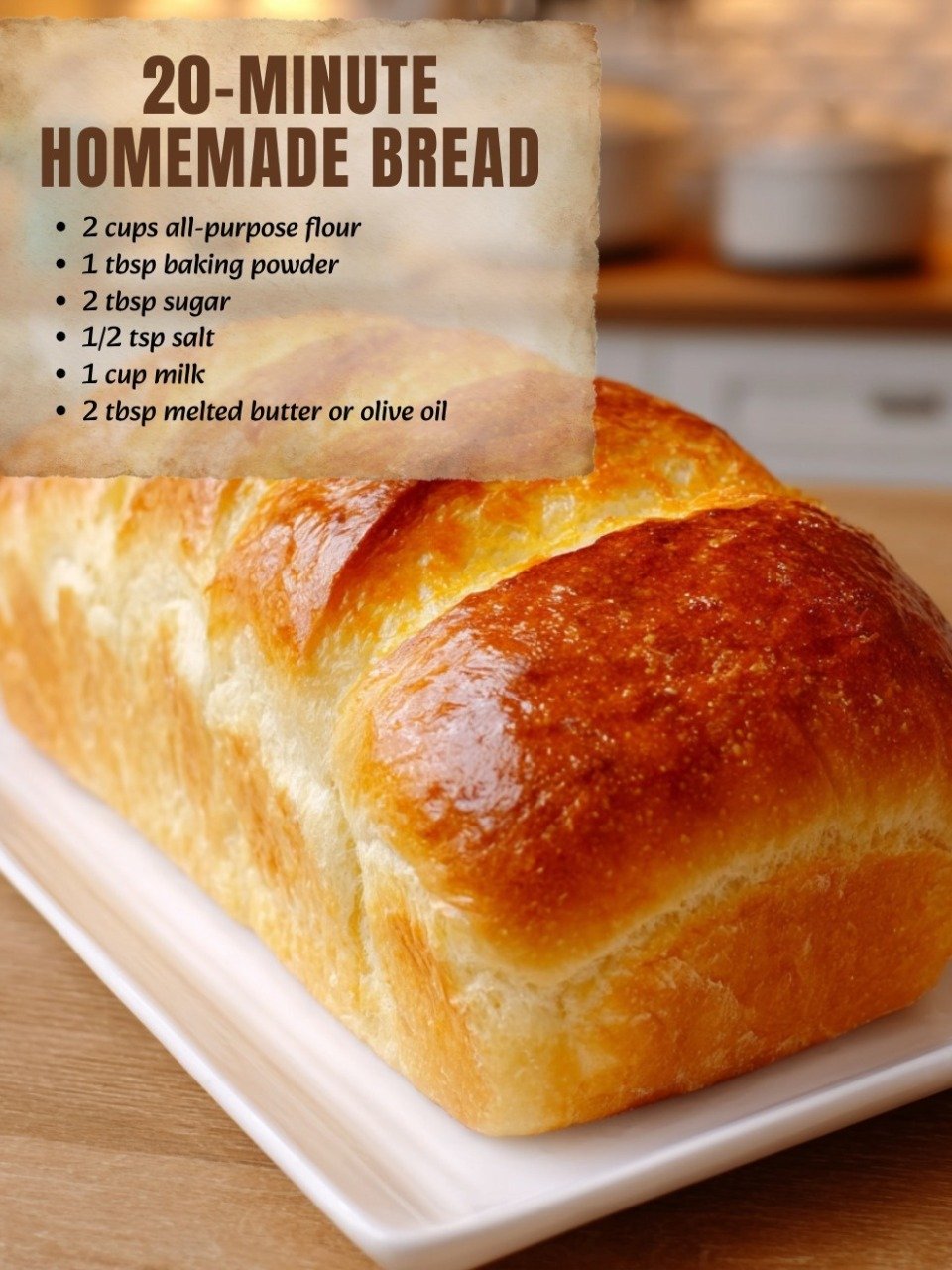
20-Minute Homemade Bread is the answer when you want fresh bread without the wait, the kneading, or the yeast. This quick bread uses smart baking science instead of time. With a high-hydration batter and a hot oven, it turns simple pantry ingredients into a soft, golden loaf with a tender crumb and lightly crisp edges. Because everything comes together in one bowl, 20-Minute Homemade Bread fits perfectly into busy days, last-minute meals, and spontaneous cravings.
Unlike traditional bread, 20-Minute Homemade Bread behaves more like a batter than a dough. As a result, it bakes quickly and evenly. The texture stays moist, slightly sweet, and incredibly versatile. You can slice it for sandwiches, toast it for breakfast, or serve it warm with butter at dinner. Once you try it, this bread becomes a reliable go-to.
I first made this bread on a weeknight when dinner was ready but the bread basket was empty. I didn’t want to wait hours or deal with yeast. I mixed everything in one bowl, poured the batter into a pan, and hoped for the best. The smell filled the kitchen almost immediately, and by the time the rest of the meal hit the table, the bread was done. Since then, this recipe has saved countless meals and reminded me that homemade bread does not have to be complicated to feel special.
Why 20-Minute Homemade Bread Works So Well
Smart shortcuts instead of long waits
20-Minute Homemade Bread skips yeast entirely. Instead, it relies on baking powder and baking soda for lift. Because these leaveners activate quickly, the bread rises in the oven rather than on the counter. That change alone saves hours.
The batter contains more liquid than traditional dough. This high hydration allows the flour to hydrate instantly, which creates a soft crumb without kneading. As the bread bakes, steam forms inside the loaf and helps it rise further. Therefore, you still get a light texture without waiting.
The hot oven finishes the job fast. High heat sets the structure quickly, so the bread holds its shape while staying tender inside. Every step supports speed without sacrificing quality.
Texture and flavor you will actually enjoy
Although it bakes fast, 20-Minute Homemade Bread does not taste rushed. The crumb stays moist and soft, while the crust turns lightly golden. A small amount of sugar balances the flavor without making it sweet.
Buttermilk plays a key role. Its acidity reacts with the baking soda, boosting lift and tenderness. If you use milk with vinegar instead, you still get similar results. Either way, the bread tastes rich and comforting.
Because the flavor stays neutral, this bread pairs well with savory or sweet toppings. That flexibility makes it useful in many situations.
Ingredients That Keep It Simple and Reliable
Pantry basics with clear roles
Every ingredient in 20-Minute Homemade Bread serves a purpose. Flour provides structure, while sugar adds balance and helps browning. Baking powder and baking soda create lift, and salt sharpens the flavor.
Buttermilk adds moisture and tenderness. Melted butter brings richness and helps keep the crumb soft. Because the ingredient list stays short, quality matters. Fresh baking powder and baking soda ensure proper rise.
This simplicity also makes the recipe affordable. Most kitchens already stock these ingredients, which keeps costs low and preparation easy.
Easy swaps and adjustments
You can make small adjustments without breaking the recipe. Whole milk with vinegar replaces buttermilk easily. Gluten-free all-purpose flour blends work well with minimal texture change.
If you want a slightly sweeter loaf, add honey or brush the top with melted butter. For rolls instead of a loaf, use a muffin tin and reduce bake time slightly. These options allow you to adapt the bread to your needs.
Because the batter is forgiving, small changes rarely cause failure. That reliability builds confidence, especially for beginner bakers.
Step-by-Step Method for Fast Success
Mixing the batter correctly
Start by preheating the oven so it reaches full temperature before baking. While the oven heats, mix all dry ingredients in one bowl. Stir well to distribute the leaveners evenly.
Add the buttermilk and melted butter. Stir gently until just combined. The batter should look thick but spoonable. Overmixing develops gluten and leads to a dense loaf, so stop as soon as no dry spots remain.
Because this batter comes together quickly, timing stays simple. From start to finish, mixing takes only a few minutes.
Baking and finishing
Pour the batter into a greased loaf pan or divide it into muffin cups for rolls. Smooth the top lightly with a spoon. Place the pan in the hot oven immediately so the leaveners activate properly.
Bake until the top turns golden and a toothpick comes out clean. The loaf will rise quickly and set fast. Once baked, remove it from the pan and let it cool briefly before slicing.
If desired, brush the top with melted butter or honey while warm. This step adds shine and extra flavor without extra effort.
Serving Ideas and Storage Tips
How to enjoy it fresh
20-Minute Homemade Bread tastes best warm, but it also holds up well once cooled. Slice it thick for sandwiches or toast it lightly for breakfast. Because the crumb stays soft, it absorbs butter and spreads easily.
Serve it alongside soups, salads, or simple dinners. Its mild flavor complements many dishes without overpowering them. You can even use it as a base for quick garlic bread.
Because the loaf is small, it disappears quickly. That makes it perfect for households that prefer fresh bread without leftovers sitting too long.
Storage and make-ahead notes
Store leftover bread in an airtight container at room temperature for up to two days. For longer storage, wrap tightly and freeze. Thaw at room temperature or toast directly from frozen.
Avoid refrigerating the bread, as cold air dries it out faster. If you plan to reheat, wrap slices in foil and warm briefly in the oven.
This bread works best when baked fresh, but it still performs well with simple storage methods.
Frequently Asked Questions
Is this the same as yeast bread?
No. This is a quick bread, similar to soda bread, but it still delivers satisfying texture.
Can I make rolls instead of a loaf?
Yes. Use a muffin tin and bake for a shorter time.
Why is my bread dense?
Overmixing or expired leaveners can cause density.
Can I double the recipe?
Yes. Bake in two pans rather than one large pan.
Does it taste sweet?
No. The sugar adds balance, not sweetness.
Conclusion
20-Minute Homemade Bread proves that fresh bread does not require hours of work or special skills. With one bowl, simple ingredients, and a hot oven, you can enjoy warm, comforting bread any time the craving hits. This recipe delivers speed, reliability, and flavor in equal measure, making it a valuable addition to any kitchen routine.


No Responses Yet