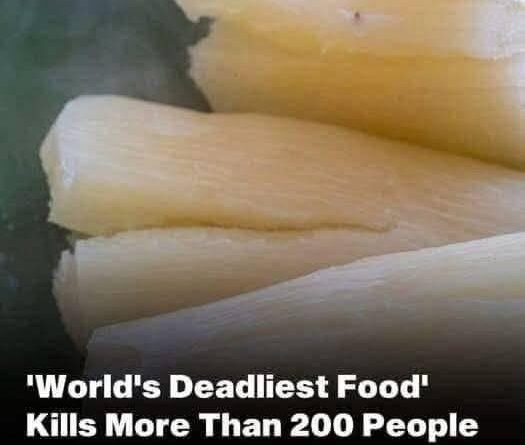
The ‘world’s deadliest food’ may sound dramatic, yet it refers to something millions of families eat every single day: cassava. Cassava, also known as yuca or manioc, feeds more than 500 million people worldwide. Despite alarming headlines, cassava is not dangerous when handled properly. In fact, it is one of the most important staple foods in tropical regions.
Because cassava contains naturally occurring compounds that can release cyanide if eaten raw or improperly prepared, it has earned a frightening nickname. However, the real story is far more balanced. When prepared correctly, cassava is safe, nourishing, affordable, and essential to food security across Africa, Asia, and Latin America.
Let’s separate myth from fact and understand why cassava remains so widely consumed.
What Is Cassava?
Cassava is a starchy root vegetable grown in tropical and subtropical climates. It thrives in poor soil, tolerates drought, and produces reliable harvests even in harsh conditions. Because of these qualities, it plays a critical role in regions where other crops may fail.
People prepare cassava in many ways. They boil it, fry it, mash it, or grind it into flour. Cassava flour becomes breads, flatbreads, porridges, and noodles. In many countries, it serves as the primary source of daily calories.
Unlike potatoes, cassava has a firmer texture and slightly nutty flavor when cooked. Additionally, it stores well underground, which allows farmers to harvest it as needed.
Why Cassava Is So Important Globally
A Lifeline Crop
Cassava supports food security for millions. Because it grows in drought-prone regions, it often becomes the difference between food stability and hunger. While grains require specific rainfall patterns, cassava adapts more easily.
Moreover, cassava provides a high carbohydrate yield per acre. This makes it extremely efficient as a staple crop. In regions where income is limited, affordable and calorie-dense foods are essential.
Economic and Cultural Value
Cassava does not just feed people. It supports livelihoods. Farmers sell fresh roots, dried chips, and processed flour. Entire communities rely on cassava production and trade.
Culturally, cassava appears in countless traditional dishes. From fufu in West Africa to tapioca-based desserts in Southeast Asia and pão de queijo in Brazil, cassava connects generations through food.
Why Is Cassava Called the ‘World’s Deadliest Food’?
The Cyanide Connection
Cassava naturally contains compounds called cyanogenic glycosides. When consumed raw or improperly processed, these compounds can release cyanide in the body.
If someone eats large amounts of improperly prepared cassava, it can lead to cyanide poisoning. In severe cases, this can become life-threatening.
However, context matters. Most incidents occur in areas experiencing food shortages where people skip essential preparation steps. Proper processing removes the harmful compounds.
Safe When Prepared Correctly
The good news is simple: traditional preparation methods make cassava safe.
Common safety steps include:
- Peeling the thick outer skin
- Soaking the root in water
- Grating and fermenting
- Thorough cooking
These processes break down and remove the cyanogenic compounds.
Therefore, cassava becomes completely safe when prepared according to established culinary practices. Millions of people eat it daily without issue.
How to Safely Prepare Cassava at Home
If you purchase fresh cassava, follow these guidelines:
- Peel completely – Remove the thick brown skin and inner pinkish layer.
- Rinse thoroughly – Wash under running water.
- Cut into chunks – Remove the fibrous core if present.
- Boil in plenty of water – Cook for at least 20–30 minutes until fork-tender.
- Discard cooking water – Do not reuse it.
Never eat cassava raw. Additionally, avoid consuming bitter varieties unless properly processed, as they contain higher cyanogenic levels.
If using cassava flour or tapioca products from reputable sources, they are already processed and safe.
Nutritional Benefits of Cassava
When prepared properly, cassava offers several benefits:
- High in carbohydrates for energy
- Naturally gluten-free
- Contains vitamin C
- Provides small amounts of fiber
Because cassava lacks protein compared to grains, many cultures pair it with legumes, meats, or vegetables to create balanced meals.
Its gluten-free nature makes it increasingly popular in specialty baking and alternative diets.
Separating Sensationalism from Reality
Headlines that label cassava as the “world’s deadliest food” often ignore cultural context. While it is true that improper preparation can be dangerous, the same principle applies to many foods.
For example, undercooked kidney beans contain toxins. Raw elderberries can be harmful. Even improperly handled meat can cause severe illness. Yet people continue to eat these foods safely because they follow proper preparation guidelines.
Cassava fits into that same category. It requires knowledge and care, not fear.
Frequently Asked Questions
1. Is cassava safe to eat?
Yes. When peeled and thoroughly cooked, cassava is safe and widely consumed.
2. Can I eat cassava raw?
No. Always cook cassava before eating.
3. What does cassava taste like?
Cooked cassava has a mild, slightly nutty flavor and a texture similar to a dense potato.
4. Is tapioca the same as cassava?
Yes. Tapioca is a starch extracted from cassava root.
5. Why do some cassava varieties taste bitter?
Bitter cassava contains higher levels of cyanogenic compounds and requires more extensive processing.
Conclusion
The ‘world’s deadliest food’ label attached to cassava sounds alarming, yet it oversimplifies a complex and important staple crop. Cassava feeds hundreds of millions of people safely every day. While it contains natural compounds that require proper preparation, traditional methods effectively remove the risk.
Rather than fear cassava, understanding it allows us to appreciate its resilience, cultural importance, and nutritional value. When handled correctly, cassava transforms from a misunderstood root into a dependable and essential food source that sustains communities around the world.


No Responses Yet