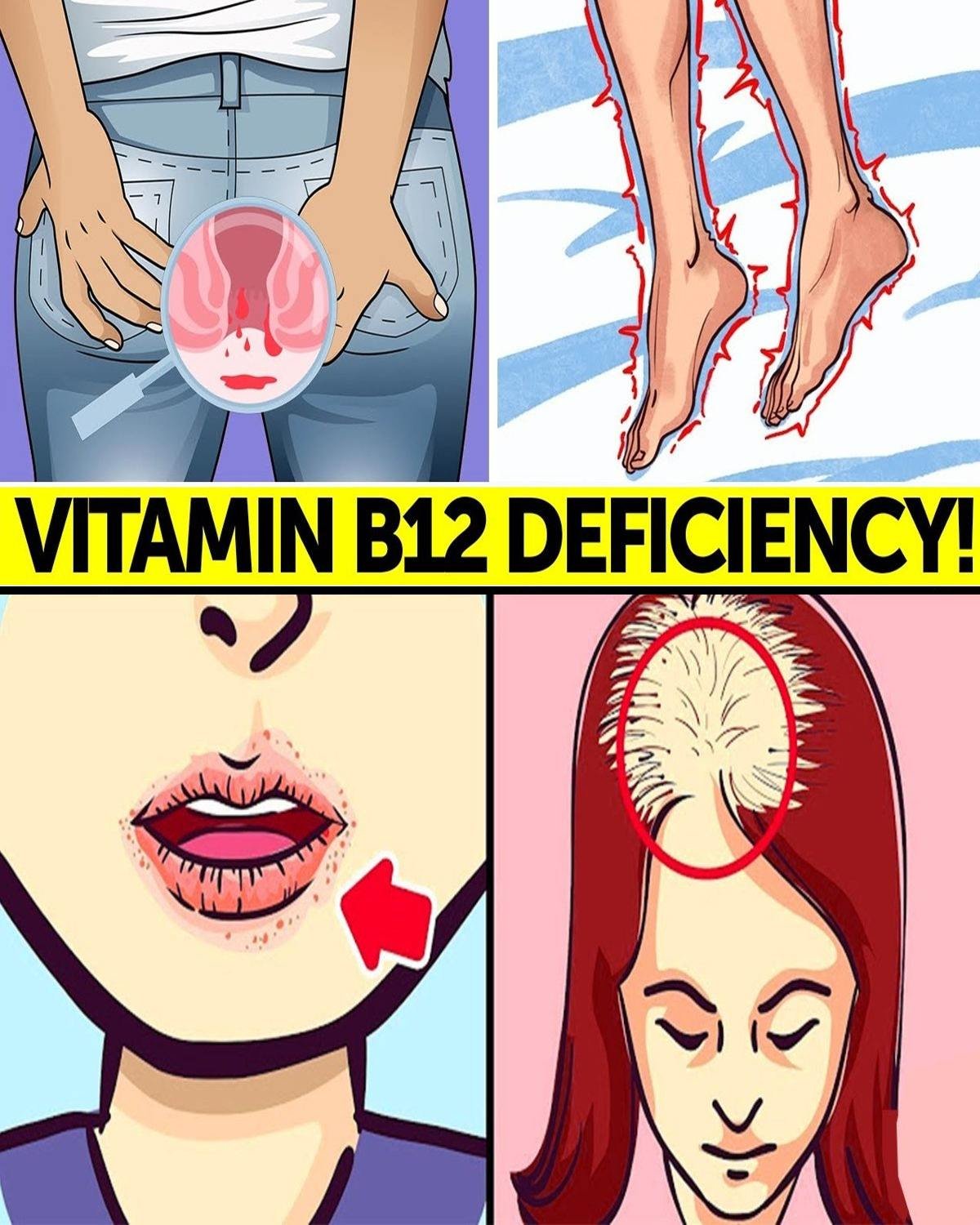
Vitamin B12 plays a critical role in keeping your nerves healthy, your red blood cells functioning properly, and your brain sharp. Yet despite its importance, B12 deficiency is surprisingly common—especially because the warning signs often creep in slowly and don’t always look like a vitamin problem at first.
Your body cannot produce vitamin B12 on its own. You must get it from food, primarily animal products, or from supplements. When intake or absorption drops, symptoms can appear gradually over months or even years, making them easy to dismiss or misdiagnose.
Here are eight unusual but medically recognized signs that your body may be begging for more vitamin B12.
🚩 1. Pins and Needles, Tingling, or Numbness
One of the earliest and most overlooked signs of low B12 is a tingling or “pins and needles” sensation in the hands, feet, or legs.
Why it happens:
Vitamin B12 is essential for maintaining the myelin sheath, the protective coating around nerves. Without enough B12, nerves become damaged, leading to abnormal sensations known as peripheral neuropathy.
Often mistaken for:
Carpal tunnel syndrome, poor circulation, or normal aging.
🚩 2. Balance Problems or Feeling Unsteady
If you notice you’re suddenly more clumsy, tripping often, or struggling with balance—especially in low light—it may not just be fatigue.
Why it happens:
Low B12 affects the spinal cord and brain pathways responsible for balance and coordination.
Why this matters:
When untreated, this symptom can resemble serious neurological disorders.
🚩 3. A Smooth, Red, Painful Tongue (Glossitis)
A tongue that looks swollen, shiny, or unusually red—and feels sore or burning—is a classic but often missed sign of B12 deficiency.
Why it happens:
B12 is necessary for healthy cell turnover. Deficiency causes inflammation and loss of normal tongue texture.
You may also notice:
- Changes in taste
- Mouth ulcers
- Difficulty eating spicy or acidic foods
🚩 4. Extreme Fatigue That Doesn’t Improve With Rest
Feeling constantly exhausted—even after adequate sleep—is one of the most common symptoms.
Why it happens:
B12 is needed to produce red blood cells. Without enough, oxygen delivery to tissues decreases, leading to persistent fatigue and weakness.
This type of tiredness often feels deep and unrelenting.
🚩 5. Brain Fog, Memory Problems, or Confusion
Low B12 can affect cognitive function in subtle but impactful ways.
Possible signs include:
- Forgetfulness
- Difficulty concentrating
- Slower thinking
- Feeling mentally “foggy”
Why it happens:
B12 supports nerve signaling in the brain. Deficiency disrupts communication between brain cells.
Left untreated, cognitive symptoms can worsen over time.
🚩 6. Mood Changes, Anxiety, or Depression
Vitamin B12 plays a role in producing neurotransmitters that regulate mood.
Low levels may contribute to:
- Depression
- Irritability
- Anxiety
- Mood swings
These symptoms may appear even before physical signs become obvious.
🚩 7. Pale or Yellowish Skin
Changes in skin tone can occur when red blood cell production is impaired.
Why it happens:
B12 deficiency can cause a type of anemia, leading to paleness. Breakdown of abnormal red blood cells may also cause a slight yellow tint to the skin or eyes.
🚩 8. Shortness of Breath or Heart Palpitations
When oxygen delivery is reduced due to anemia, the heart works harder to compensate.
You may notice:
- Shortness of breath with mild activity
- Rapid or irregular heartbeat
- Lightheadedness
These symptoms should always be taken seriously.
Who Is Most at Risk for Vitamin B12 Deficiency?
Certain groups are more vulnerable, including:
- Adults over 50
- Vegetarians and vegans
- People with digestive disorders
- Those taking acid-reducing medications
- Individuals with absorption issues
Even people who eat animal products can become deficient due to poor absorption.
What to Do If You Notice These Signs
If you experience several of these symptoms together, especially neurological ones like numbness or balance issues, it’s important to speak with a healthcare provider.
A simple blood test can measure B12 levels. Early treatment is highly effective, but long-term deficiency can cause permanent nerve damage if ignored.
Conclusion
Vitamin B12 deficiency doesn’t always announce itself clearly. Instead, it often shows up through strange, seemingly unrelated symptoms that are easy to dismiss. Tingling hands, balance problems, mood changes, and fatigue are not just “normal” signs of aging—they can be signals your body is asking for help.
Recognizing these red flags early and addressing them with proper medical guidance can protect your nerves, brain, and overall health. When it comes to vitamin B12, paying attention now can prevent serious problems later.


No Responses Yet