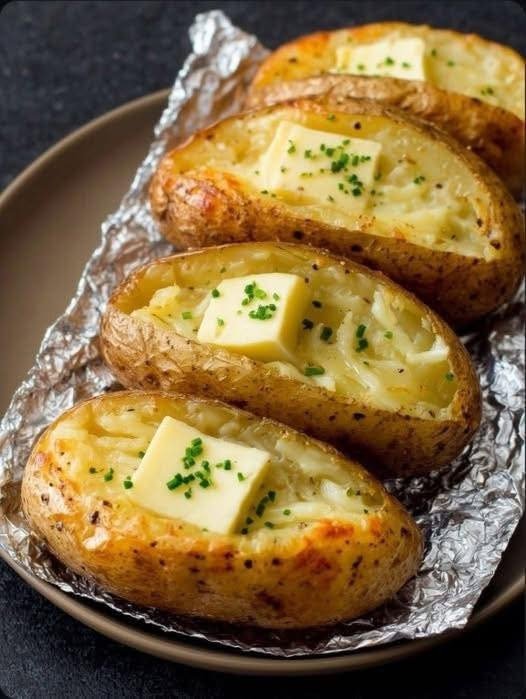
A Perfect Baked Potato is one of the simplest pleasures in the kitchen, yet it is surprisingly easy to get wrong. Too often, baked potatoes come out with leathery skins, damp centers, or a texture that feels dense instead of light. When done right, though, a Perfect Baked Potato delivers crackly, salty skin that gives way to a steaming, cloud-like interior ready for butter, cheese, sour cream, or any topping you love.
The good news is that perfection does not depend on fancy equipment or secret ingredients. The difference comes down to method. By skipping foil, using the right amount of oil and salt, and baking at the proper temperature, you can make a Perfect Baked Potato every single time.
This approach works whether you are serving potatoes as a simple side or building them into a full meal.
Why This Perfect Baked Potato Method Works
No Foil Means Crispy Skin
One of the most common mistakes with baked potatoes is wrapping them in foil. Foil traps steam, which leads to soggy skin. A Perfect Baked Potato needs dry heat so the moisture inside the potato can escape gradually while the skin crisps.
Leaving the potato uncovered allows the skin to dehydrate slightly and become golden and crackly. That contrast between crisp skin and fluffy interior is what defines a Perfect Baked Potato.
Salt and Oil Do the Heavy Lifting
Rubbing the potato with oil encourages even browning and helps the skin crisp. Salting the skin does more than add flavor. Salt draws moisture to the surface, which evaporates in the oven, improving texture.
This simple step is why a Perfect Baked Potato tastes seasoned all the way through, not bland beneath the toppings.
Ingredients You’ll Need for a Perfect Baked Potato
Simple and Essential
A Perfect Baked Potato requires very little. Large russet potatoes work best because their high starch content creates a fluffy interior. You also need oil, preferably olive oil or another neutral option, and coarse salt.
That is it. Everything else is optional and comes after baking.
Choosing the Right Potato
Russet potatoes are ideal for baking. Their thick skins crisp well, and their interiors turn light and airy. Avoid waxy potatoes, which tend to stay dense when baked.
Selecting evenly sized potatoes helps them cook at the same rate, which matters if you are baking more than one at a time.
How to Make a Perfect Baked Potato Step by Step
Preparing the Potatoes
Start by heating your oven to a high temperature. A hot oven is essential for crisp skin. Scrub the potatoes thoroughly under running water to remove dirt, then dry them completely. Moisture on the skin prevents crisping.
Pierce each potato several times with a fork. This allows steam to escape during baking and prevents the potato from bursting.
Rub each potato lightly with oil, then sprinkle generously with salt, making sure the entire skin is coated.
Baking to Perfection
Place the potatoes directly on the oven rack or on a baking sheet. Baking directly on the rack allows air to circulate evenly, but a sheet works well too.
Bake until the skins are deeply golden and the potatoes give easily when squeezed with an oven mitt. The interior should feel soft all the way through when pierced with a knife.
For extra crisp skin, place the potatoes directly on the rack for the final portion of baking if you started them on a sheet.
I learned the importance of skipping foil years ago after repeatedly ending up with limp potato skins. The first time I baked potatoes uncovered, heavily salted, and at high heat, the difference was immediate. The skin cracked under my fingers, and the inside fluffed up effortlessly. That moment changed how I made baked potatoes forever.
How to Serve a Perfect Baked Potato
Classic Toppings That Never Fail
A Perfect Baked Potato shines with simple toppings. Butter melts instantly into the hot interior. Sour cream adds tang, while shredded cheese melts into every crevice.
Salt and freshly ground pepper are often all you need, especially when the potato itself is cooked correctly.
Turning It Into a Meal
Baked potatoes are incredibly versatile. Top them with chili, shredded beef, roasted vegetables, or steamed broccoli and cheese for a complete meal.
Because the interior is fluffy and neutral, a Perfect Baked Potato pairs well with both rich and light toppings.
Common Mistakes to Avoid
Baking at Too Low a Temperature
Low oven temperatures lead to dry interiors and pale skins. High heat is necessary to achieve both crisp skin and a fully cooked center.
Overcrowding the Oven
If potatoes are packed too closely together, steam builds up and prevents proper crisping. Give each potato space so air can circulate.
Frequently Asked Questions
Should I wrap baked potatoes in foil?
No. Foil traps steam and causes soggy skin.
Can I bake potatoes ahead of time?
Yes, but they are best served fresh. Reheat uncovered to restore some crispness.
How do I know when they are done?
A knife should slide easily into the center, and the potato should feel soft when squeezed.
Can I use salted butter on top?
Yes. Adjust added salt accordingly.
Is oil necessary?
Yes. Oil helps the skin crisp and brown evenly.
Conclusion
A Perfect Baked Potato is not about luck or expensive tools. It is about respecting the process. By using high heat, skipping foil, salting the skin, and baking until fully tender, you can achieve crisp, flavorful skin and a fluffy interior every time.
Once you master this method, baked potatoes stop being an afterthought and become something you look forward to serving. Simple, comforting, and endlessly customizable, the Perfect Baked Potato truly earns its name.


No Responses Yet