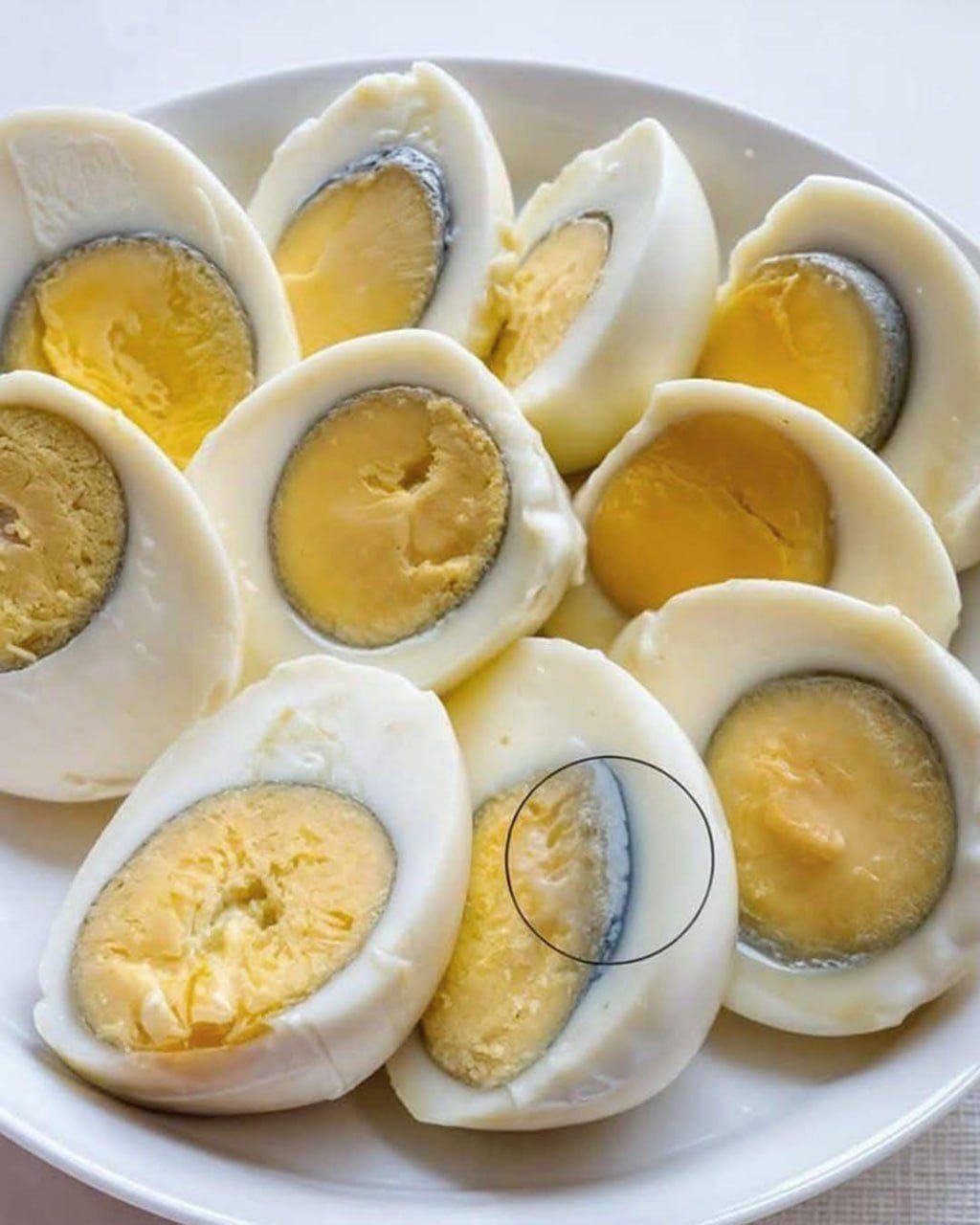
Seeing a green or gray ring around the yolk of a hard-boiled egg can be surprising, and for many people, it sparks immediate concern. The good news is simple and reassuring: a greenish yolk is completely safe to eat. It does not mean the egg is spoiled, undercooked, or unsafe. Instead, it is a classic sign of overcooking—and a common kitchen science moment.
Understanding why this happens makes it easy to prevent in the future and helps you cook hard-boiled eggs with perfectly yellow, creamy yolks every time.
What Causes the Green or Gray Ring?
A Harmless Chemical Reaction
The green color forms due to a reaction between iron in the yolk and sulfur in the egg white. When eggs are cooked too long or at too high a temperature, sulfur in the whites is released as hydrogen sulfide gas. That gas reacts with iron in the yolk, creating iron sulfide, which appears greenish-gray.
This reaction happens at the surface of the yolk, which is why you usually see a ring rather than a fully green yolk.
Overcooking Is the Real Culprit
The longer eggs stay in boiling water—or the hotter they get—the more likely this reaction becomes. Eggs that simmer or boil aggressively for too long are the most common cause of green yolks.
This is especially common when:
- Eggs are boiled rapidly instead of gently simmered
- Eggs are left in hot water after cooking
- Eggs are not cooled quickly
Is a Green-Tinged Yolk Safe to Eat?
Yes, Completely Safe
A green or gray yolk does not indicate spoilage, bacteria, or food poisoning. It only reflects how the egg was cooked. The flavor may be slightly drier or chalkier, but the egg is still safe to eat.
If the egg smells fine and the whites are firm, there is no health risk involved.
Texture May Change, Not Safety
While safe, overcooked eggs often have:
- Dry or crumbly yolks
- Rubbery whites
- Less pleasant texture
That is usually the real downside—not safety.
How to Prevent Green Yolks in Hard-Boiled Eggs
Use Gentle Heat
Start eggs in cold water, then bring the water to a gentle boil. Once boiling, reduce the heat so the water simmers instead of rolling aggressively. High heat increases sulfur release and raises the chance of discoloration.
Do Not Overcook
Once the water reaches a boil:
- Remove the pot from heat
- Cover it
- Let eggs sit in the hot water for the appropriate time
For large eggs, about 9–12 minutes total cooking time usually works well, depending on yolk preference.
Cool Eggs Immediately
After cooking, transfer eggs to an ice bath or very cold water. Rapid cooling stops the chemical reaction and prevents the green ring from forming.
Let them cool completely before peeling.
Does Egg Freshness Matter?
Freshness plays a small role but is not the main factor. Older eggs are actually easier to peel, but they can be slightly more prone to sulfur release if overcooked. Even very fresh eggs will develop green yolks if cooked too long.
The method matters far more than the age of the egg.
Common Myths About Green Egg Yolks
“The Egg Has Gone Bad”
False. Spoiled eggs smell strongly of sulfur before cooking and are unsafe regardless of yolk color. A green ring alone does not indicate spoilage.
“The Egg Is Undercooked”
Also false. Green yolks happen from too much heat, not too little.
“It Means the Egg Is Old”
Not necessarily. Fresh eggs can still turn green if overcooked.
Quick Tips for Perfect Hard-Boiled Eggs
- Start eggs in cold water
- Bring to a boil, then reduce heat
- Do not boil aggressively
- Use a timer
- Cool immediately in ice water
These steps keep yolks bright yellow and tender.
Frequently Asked Questions
Can I still use green-ringed eggs for deviled eggs?
Yes, but the texture may be drier. Mash with extra mayonnaise for best results.
Does altitude affect green yolks?
Yes. At higher altitudes, water boils at a lower temperature, often requiring longer cooking times, which can increase the risk if not adjusted carefully.
Do pressure cookers prevent green yolks?
Often yes, because cooking times are shorter and more controlled.
Does adding salt or vinegar help?
These help with peeling, not with preventing green yolks.
Is the green color ever harmful?
No. It is purely cosmetic and textural.
Conclusion
A green or gray ring around a hard-boiled egg yolk is simply a sign of overcooking—not a sign of danger. It results from a natural reaction between iron and sulfur under high heat. While the texture may be less appealing, the egg is completely safe to eat.
With gentler heat, proper timing, and quick cooling, you can avoid green yolks altogether and enjoy hard-boiled eggs with smooth whites and bright, golden centers every time.


No Responses Yet