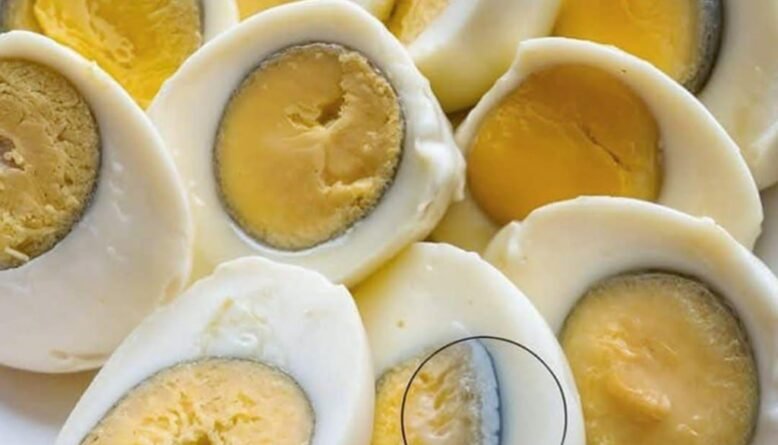
If you’ve ever sliced open a hard-boiled egg and noticed a greenish or gray ring around the yolk, it can be surprising. At first glance, it looks like something went wrong. However, this color change does not mean the egg is spoiled, unsafe, or moldy. Instead, the green ring around their yolk is a common and harmless result of how the egg was cooked and cooled.
Understanding why it happens makes it easy to avoid, especially if you like your hard-boiled eggs with a bright yellow center and a smooth, creamy texture.
What Causes the Green Ring Around the Yolk?
The green or gray ring forms because of a chemical reaction inside the egg. When eggs are boiled too long or at too high a temperature, sulfur in the egg white is released. At the same time, iron naturally present in the yolk becomes more reactive.
As a result, the sulfur and iron combine to create ferrous sulfide, which settles on the surface of the yolk. This compound is what gives the yolk that dull green or gray outline.
This reaction is more likely when:
- Eggs are overcooked
- Eggs are left in hot water too long
- Eggs are not cooled quickly after boiling
The longer the egg stays hot, the more intense the reaction becomes, and the darker the ring appears.
Is an Egg With a Green Ring Safe to Eat?
Yes, absolutely. Eggs with a green ring around their yolk are perfectly safe to eat. The color change does not indicate spoilage or contamination.
That said, texture and flavor can suffer. Overcooked yolks tend to become:
- Dry or crumbly
- Chalky instead of creamy
- Slightly sulfur-smelling
So while the egg won’t harm you, it may not be as enjoyable as a properly cooked one.
How to Prevent the Green Ring (Perfect Hard-Boiled Eggs Every Time)
Fortunately, preventing the green ring around their yolk is simple. It all comes down to timing and cooling.
1. Don’t Overcook the Eggs
Place eggs in a pot and cover them with cold water. Bring the water to a rolling boil, then immediately remove the pot from heat, cover it, and let the eggs sit in the hot water for 9–12 minutes, depending on egg size.
2. Cool Them Quickly
As soon as the cooking time ends, transfer the eggs to an ice bath or run them under cold water. Rapid cooling stops the sulfur-iron reaction before it can form the ring.
3. Peel at the Right Time
Cooling also helps with peeling. Eggs that cool quickly contract slightly inside the shell, making them easier to peel cleanly.
4. Use Fresh Water, Not Steam Heat
Gentler heat leads to better texture. Avoid boiling aggressively for long periods, as high heat accelerates sulfur release.
Why This Happens More Often Than You Think
Many people leave eggs boiling while multitasking. As a result, eggs stay in hot water longer than needed. In addition, letting cooked eggs sit in the pot without cooling is one of the most common causes of the green ring around their yolk.
Interestingly, this issue appears more often in large batches, such as eggs cooked for salads, parties, or meal prep. Without quick cooling, heat lingers and the reaction continues.
Final Thoughts
Seeing a green ring around their yolk might look alarming, but it’s simply a sign that the egg cooked a little too long or cooled too slowly. The egg is still safe to eat, though the texture may be less than ideal.
With proper timing and a quick ice bath, you can easily avoid this reaction and enjoy hard-boiled eggs that look as good as they taste—bright yellow yolks, smooth texture, and no sulfur smell.
Once you know the cause, preventing it becomes second nature.


No Responses Yet