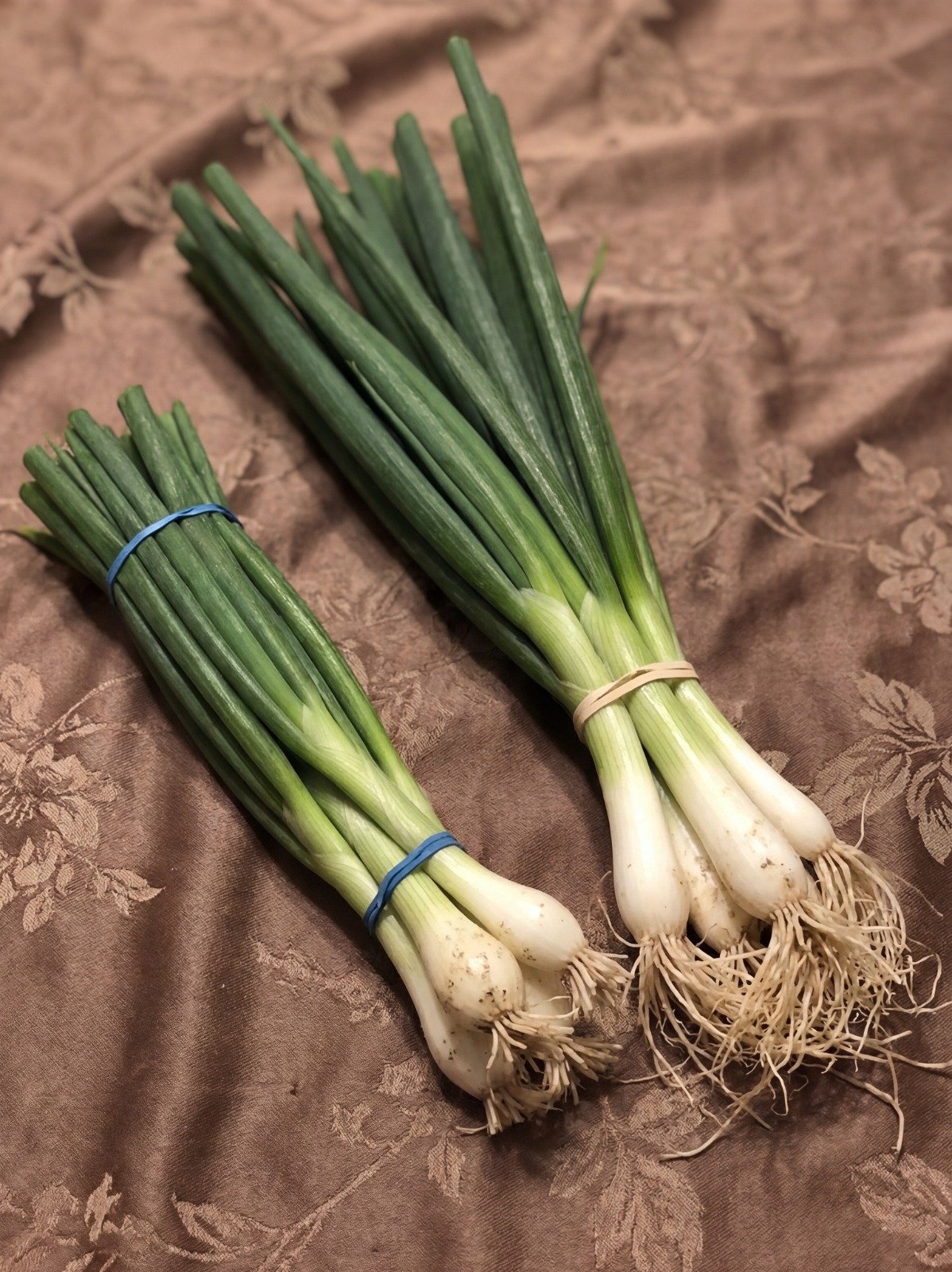
At first glance, green onions, scallions, spring onions, and chives all look like variations of the same plant. They share a similar green color, mild onion aroma, and frequent use as garnishes or flavor boosters. However, they are not the same, and understanding the differences helps you choose the right one for flavor, texture, and presentation.
This guide breaks it down clearly and practically, so you know exactly what to grab at the store and how to use it in the kitchen.
1. Green Onions = Scallions (They Are the Same Thing)
Key fact: Green onions and scallions are two names for the exact same vegetable.
What They Are
Green onions, also called scallions, are young onions harvested before the bulb fully develops. They are most commonly varieties of Allium fistulosum.
Appearance
- Long, thin green stalks
- Straight white base
- No round bulb
Flavor
- Mild and fresh
- Slightly sweet
- Much gentler than mature onions
How to Use
- Raw: salads, garnishes, salsas, baked potatoes
- Cooked: stir-fries, eggs, soups (best added near the end)
Pro Tip
Both the white and green parts are edible. The white end has more bite, while the green tops are softer and more delicate.
Bottom line: If a recipe calls for green onions or scallions, you can use either without hesitation.
2. Spring Onions (More Mature, More Flavor)
Spring onions are often confused with green onions, but they are older and stronger.
What They Are
Spring onions are onions harvested later in their growth cycle. Unlike scallions, they develop a small bulb at the base.
Appearance
- Thicker stalks
- Small round bulb (white or slightly purple)
- Less uniform than scallions
Flavor
- Stronger and more onion-like
- Still milder than fully mature onions
How to Use
- Grilled or roasted whole
- Sautéed in savory dishes
- Chopped raw when you want more bite
Best Uses
Spring onions shine when cooked. Grilling or roasting brings out their natural sweetness while softening their sharper edge.
Bottom line: Choose spring onions when you want more onion flavor without using a full-sized onion.
3. Chives (The Mildest and Most Delicate)
Chives are the most delicate member of the group and are technically classified as an herb.
What They Are
Chives are a different species (Allium schoenoprasum) and are grown primarily for their thin green leaves.
Appearance
- Very thin, grass-like stalks
- Deep green color
- No bulb at all
Flavor
- Very mild onion flavor
- Slightly grassy
- No sharp bite
How to Use
- Garnishes for soups, eggs, potatoes
- Mixed into sour cream or butter
- Finishing touch on salads
Important Note
Chives lose flavor quickly when cooked, so they are best used raw or added at the very end.
Bottom line: Use chives when you want a gentle onion hint without overpowering a dish.
Quick Comparison Table
| Type | Bulb | Flavor Strength | Best Use |
|---|---|---|---|
| Green Onions / Scallions | No | Mild | Raw or lightly cooked |
| Spring Onions | Small bulb | Medium | Grilled, roasted, sautéed |
| Chives | No | Very mild | Garnish, finishing touch |
How to Choose the Right One
- For salads and garnishes: chives or green onions
- For stir-fries and eggs: green onions
- For grilling or roasting: spring onions
- For subtle flavor: chives
- For stronger onion presence: spring onions
If a recipe is flexible, green onions are the safest all-purpose choice.
Common Myths Cleared Up
- “Scallions and green onions are different.”
False. They are the same thing. - “Spring onions are just big scallions.”
Not quite. Spring onions are more mature and develop a bulb. - “Chives are just tiny green onions.”
No. Chives are a separate herb with a much milder flavor.
Conclusion
While green onions, scallions, spring onions, and chives may look similar, they serve different roles in the kitchen. Green onions and scallions are identical and versatile, spring onions bring stronger flavor and structure, and chives add a delicate finishing touch.
Once you understand these differences, recipes become easier to follow, substitutions make more sense, and your dishes benefit from better balance and flavor.


No Responses Yet