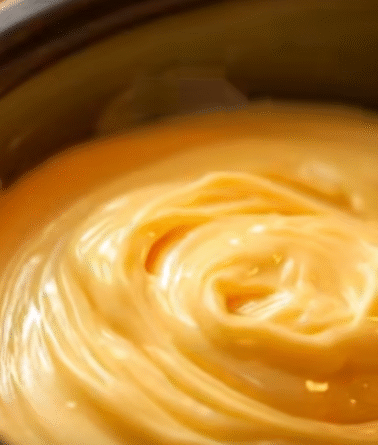
Step-by-Step Instructions for Slow Cooker Vanilla Custard
Mixing the Custard Base
First, crack the eggs into a large bowl. Then add granulated sugar. Whisk until the mixture becomes pale and slightly frothy. This step incorporates air and dissolves sugar properly.
Next, gradually pour in the whole milk while whisking continuously. After that, add heavy cream. Continue whisking until fully combined. Because gradual mixing prevents bubbles, pour slowly and stir gently.
Finally, stir in vanilla extract and salt. At this stage, the mixture should look smooth and uniform.
Cooking in the Slow Cooker
Carefully pour the custard mixture into your slow cooker. Then cover with the lid.
Set the slow cooker to LOW. Cook for 2 to 3 hours. However, begin checking around the 2-hour mark. The custard is ready when the edges appear set and the center still jiggles slightly.
Once done, turn off the slow cooker. Let the Slow Cooker Vanilla Custard cool slightly before serving warm.
If you prefer chilled custard, transfer it to a bowl and refrigerate for several hours. As it cools, it will firm up beautifully.
Tips, Variations, and Serving Ideas
Flavor Variations to Try
Although classic Slow Cooker Vanilla Custard tastes amazing, you can easily customize it.
For a richer twist, replace half the milk with coconut milk. This variation adds subtle tropical notes while keeping the texture smooth.
If you enjoy warm spices, add 1 teaspoon ground cinnamon or a pinch of nutmeg before cooking. These spices create a cozy, fall-inspired version.
For dairy alternatives, substitute almond milk or soy milk. However, because plant-based milks vary in sweetness, adjust sugar to taste.
For an adult variation, stir in 1 tablespoon bourbon or rum. The alcohol enhances depth without overpowering the vanilla flavor.
Creative Serving Suggestions
Slow Cooker Vanilla Custard pairs beautifully with toppings and desserts.
Top it with:
- Fresh berries
- Whipped cream
- Cinnamon dusting
- Caramel sauce
Additionally, serve it alongside apple pie for an unforgettable pairing. The creamy custard balances tart fruit perfectly.
You can also spoon chilled custard over warm brownies or pound cake. Because the texture remains smooth and pourable, it works as both dessert and sauce.
Common Mistakes to Avoid
Overcooking the Custard
The most common mistake involves overcooking. If the center no longer jiggles, it may become too firm after cooling. Therefore, always remove it while slightly wobbly.
Cooking on High
Although it may seem faster, avoid cooking on HIGH. Rapid heat can cause curdling or scrambling. Slow Cooker Vanilla Custard requires patience for the best results.
Skipping the Cooling Time
Custard continues to set as it cools. Therefore, allow at least 20 minutes before serving warm. If chilling, refrigerate for several hours to achieve ideal texture.
Frequently Asked Questions
Can I make Slow Cooker Vanilla Custard ahead of time?
Yes. In fact, it tastes even better after chilling overnight. Simply store covered in the refrigerator.
How do I know when the custard is done?
The edges should look set, while the center remains slightly jiggly. A gentle shake of the slow cooker insert helps you check.
Can I double the recipe?
Yes, but cooking time may increase slightly. Monitor closely to prevent overcooking.
Why did my custard turn watery?
Watery custard often results from undercooking. Allow it to cook a bit longer until the center thickens properly.
Can I freeze Slow Cooker Vanilla Custard?
Freezing changes the texture. Therefore, refrigeration works best for storage.
Conclusion
Slow Cooker Vanilla Custard proves that simple ingredients can create extraordinary results. Because the slow cooker provides gentle, consistent heat, the custard turns out creamy and smooth every time. Whether you enjoy it warm on a cozy evening or chilled for a refreshing dessert, this recipe adapts effortlessly to any occasion.
With minimal effort and maximum flavor, Slow Cooker Vanilla Custard deserves a permanent place in your dessert rotation. Once you try this easy method, you may never return to oven baking again.


No Responses Yet