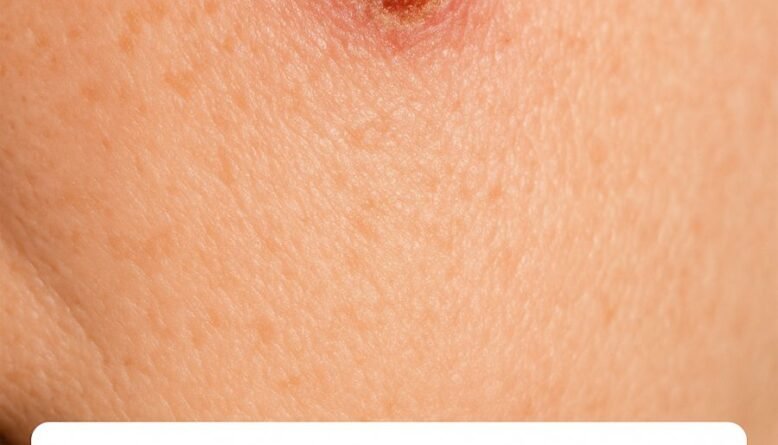
A small scab, sore, or crusty patch that refuses to heal—even when you leave it alone—might seem like a minor irritation. But if a lesion remains persistent, scaly, oozing, or recurring in the same spot for more than 2–4 weeks, your skin could be sending a serious warning signal.
While many causes are harmless, a non-healing sore can sometimes be an early sign of skin cancer, particularly squamous cell carcinoma (SCC) or basal cell carcinoma (BCC). Other possibilities include infection, chronic irritation, or autoimmune conditions. Ignoring it could delay diagnosis and treatment, so awareness is crucial.
🔍 Common Causes of a Non-Healing Crusty Spot
1. Actinic Keratosis (AK)
- Appearance: Rough, scaly, crusty patch on sun-exposed areas such as the face, ears, or hands.
- Why it matters: Considered pre-cancerous—around 10% can progress to squamous cell carcinoma if untreated.
- Most common in: Fair-skinned adults over 40 with a history of sun damage.
2. Squamous Cell Carcinoma (SCC)
- Appearance: Firm, red nodule or scaly, crusted patch that may bleed or form a persistent sore.
- Why it matters: SCC can invade surrounding tissue and, in rare cases, spread to other parts of the body.
- Risk factors: Chronic sun exposure, fair skin, older age, immunosuppression.
3. Basal Cell Carcinoma (BCC)
- Appearance: Shiny or pearly bump, sometimes with visible blood vessels or a small crusty center.
- Why it matters: BCC grows slowly and rarely spreads, but early treatment prevents disfigurement.
- Common in: Sun-exposed areas, especially the face and neck.
4. Infections and Other Conditions
- Bacterial or fungal infections can cause persistent crusty patches.
- Autoimmune disorders (like psoriasis or eczema) may lead to chronic, scaly lesions.
- Chronic irritation or trauma—repeated scratching or friction—can prevent healing.
🩺 When to Seek Medical Attention
You should consult a dermatologist or healthcare professional if you notice any of the following:
- The spot hasn’t healed in 2–4 weeks.
- Bleeding, oozing, or pain develops.
- Rapid growth or changes in color, shape, or texture.
- Recurrent sores in the same area.
Early evaluation can catch skin cancer or other serious conditions when treatment is most effective.
✅ Takeaways
- Don’t ignore persistent spots—even small, seemingly harmless lesions can signal a problem.
- Sun protection matters—UV exposure is a major risk factor for pre-cancerous and cancerous lesions.
- Professional evaluation is the safest way to ensure proper diagnosis and treatment.
Conclusion
A crusty, non-healing patch on your skin is more than just a nuisance. While it may be benign, it could also indicate early skin cancer or another underlying condition. Prompt evaluation by a healthcare professional, combined with sun protection and awareness, is the best way to protect your skin and health.
Remember: when in doubt, get it checked out—early action saves lives and prevents complications.


No Responses Yet