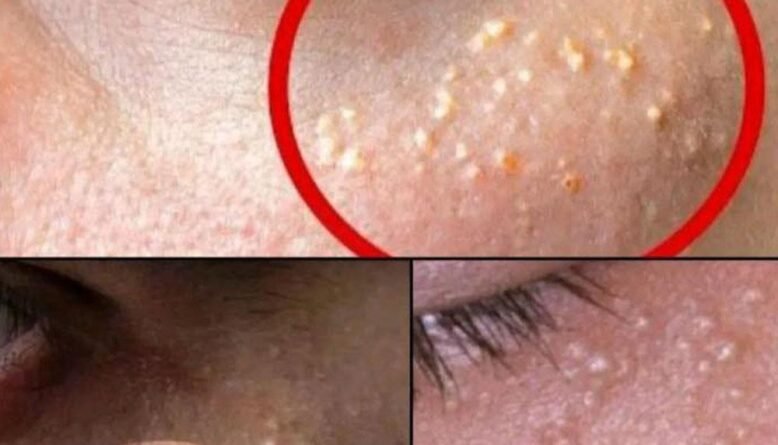
You’ve probably felt them—tiny, firm, white bumps sitting just beneath the surface of your skin. They often appear around the eyes, cheeks, or forehead. They look like whiteheads, yet they refuse to pop. You can scrub, steam, and spot-treat, but they remain stubborn.
These bumps are called milia (pronounced mill-ee-uh). They are small keratin-filled cysts that form when dead skin cells become trapped under the skin. Unlike acne, milia do not have an opening to the surface. Therefore, squeezing them not only fails—it can cause irritation, scarring, or infection.
While milia are harmless, they can feel frustrating. The good news is that you can often prevent and gently manage them at home using safe, evidence-based methods.
I first noticed milia after switching to a heavier eye cream one winter. I assumed they were whiteheads and tried to treat them like acne. That only made my skin red and irritated. Once I learned what milia actually were, I adjusted my routine—lighter moisturizers, gentle exfoliation, and sunscreen. Over time, the bumps gradually disappeared. That experience taught me that patience and the right approach matter more than force.
What Causes Milia in Adults?
Milia form when keratin—a protein naturally found in skin—gets trapped beneath the surface. Instead of shedding properly, dead skin cells accumulate and create tiny cysts.
Common Triggers Include:
Sun damage
Ultraviolet (UV) exposure thickens the outer layer of skin, making it harder for dead cells to shed normally.
Heavy creams or occlusive products
Rich eye creams and thick oils can block tiny openings in the skin, increasing the chance of trapped keratin.
Skin trauma
Burns, blisters, aggressive exfoliation, or cosmetic procedures may disrupt the skin’s natural renewal process.
Aging
As skin ages, cell turnover slows. When old cells are not shed efficiently, milia are more likely to form.
Genetics
Some people are simply more prone to developing milia.
It’s important to remember: milia are not caused by poor hygiene. They are a structural skin issue—not a cleanliness problem.
What NOT to Do (Seriously—Avoid These)
Many people make milia worse by treating them like acne. However, because milia do not have an open pore, traditional acne methods will not work.
Avoid:
- Squeezing or popping them
- Using needles at home
- Over-exfoliating aggressively
- Applying harsh acne spot treatments
- Picking at the skin
Attempting to extract milia yourself can cause scarring, inflammation, or infection. Dermatologists use sterile tools and proper techniques when removal is necessary.
How to Treat Milia Naturally and Safely at Home
While milia often resolve on their own, you can support healthy skin turnover with gentle strategies.
1. Gentle Chemical Exfoliation
Products containing alpha hydroxy acids (AHAs) or beta hydroxy acids (BHAs) help dissolve dead skin cells gradually.
Use a mild exfoliant 2–3 times per week. Overuse can irritate the skin and worsen the issue.
2. Retinol (Vitamin A Derivatives)
Retinol encourages cell turnover, which helps prevent keratin buildup.
Start with a low concentration and apply at night. Always follow with sunscreen during the day, as retinol increases sun sensitivity.
3. Lighten Up Heavy Products
If milia appear around your eyes or cheeks, evaluate your skincare routine.
Switch from thick, occlusive creams to lighter, non-comedogenic moisturizers. This simple change often makes a noticeable difference.
4. Protect Your Skin from Sun Damage
Daily sunscreen use is essential. Sun damage thickens the outer skin layer and slows normal shedding.
Choose a broad-spectrum SPF 30 or higher and apply it consistently.
5. Gentle Warm Compress
A warm (not hot) compress may soften the skin slightly and support natural shedding. However, this is supportive—not a quick fix.
When to See a Dermatologist
If milia persist for several months, increase in number, or cause cosmetic concern, a dermatologist can remove them safely.
Professional extraction is quick and typically leaves minimal marks when done properly.
Preventing Future Milia
Prevention focuses on supporting healthy skin turnover and avoiding pore-blocking products.
- Use gentle exfoliation regularly
- Avoid heavy, greasy creams
- Wear sunscreen daily
- Introduce retinol gradually if appropriate
Consistency matters more than intensity.
Final Thoughts
Tiny white bumps on your face can feel frustrating, especially when they resist traditional acne treatments. However, milia are harmless and manageable.
The key is understanding that milia are not pimples. They require patience, gentle care, and smart skincare choices—not aggressive squeezing or scrubbing.
With consistent exfoliation, lighter products, and proper sun protection, many milia will gradually resolve on their own. And if they do not, a dermatologist can safely remove them without lasting damage.
Instead of fighting your skin, support it. Gentle care always wins in the long run.


No Responses Yet