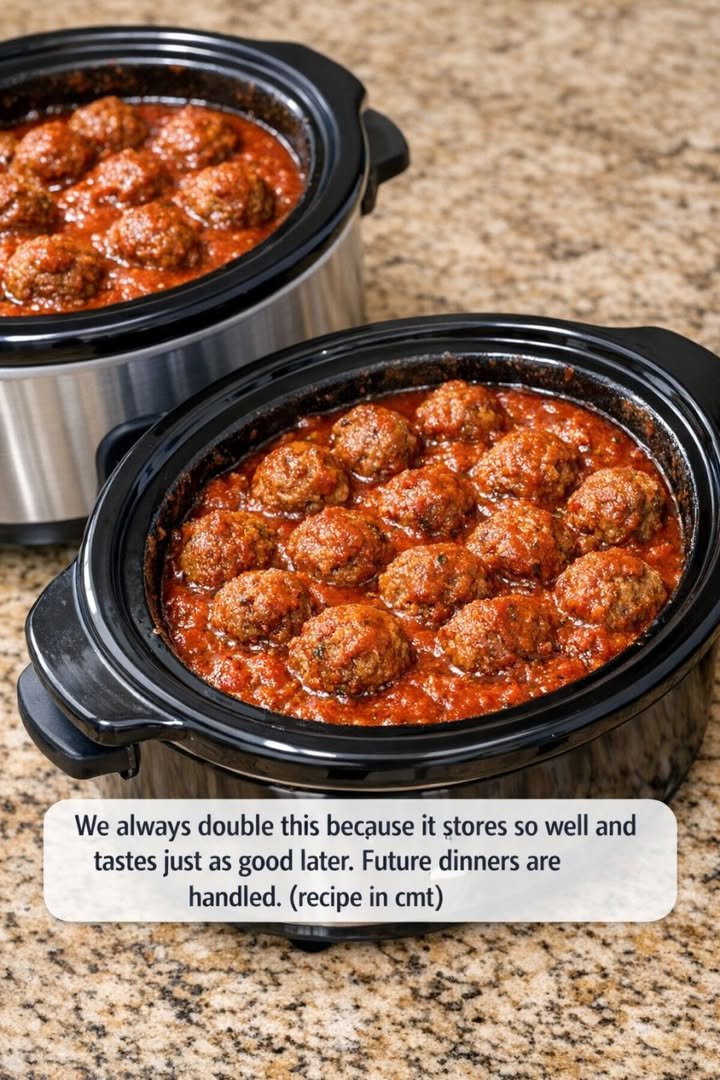
There’s a special kind of peace that comes from opening the freezer and knowing dinner is already done. Not halfway done. Not “almost there.” Completely handled. This slow cooker meatballs and sauce recipe is the reason we always double the batch. It freezes beautifully, reheats like a dream, and somehow tastes even better after a little time.
This is real, comforting Italian-American–style meatball sauce. Rich tomatoes. Plenty of garlic. Tender meatballs that stay juicy, never tough. It’s designed specifically for freezer-to-slow-cooker cooking, so future dinners require nothing more than thaw, dump, and walk away.
On busy weeks, this recipe feels like a gift from your past self.
I started making this in big batches after one too many nights of staring into the fridge with no plan. The first time I froze it, I wasn’t sure how well it would hold up. Then a few weeks later, I dumped a bag into the slow cooker before work. When I came home, the house smelled like a Sunday dinner that had been simmering all day. The meatballs were tender. The sauce was deep and balanced. From that moment on, doubling this recipe became non-negotiable.
Why This Meatball Sauce Is Perfect for the Freezer
Built for Make-Ahead Cooking
This recipe isn’t an afterthought freezer meal. It’s designed for it. The sauce has enough body to protect the meatballs during freezing, and the meat mixture includes the right balance of fat and binders to stay tender after reheating.
Instead of drying out or breaking apart, the meatballs hold their shape and soak up even more flavor over time. That’s why it tastes just as good—if not better—weeks later.
One Batch, Multiple Dinners
A single double batch fills three to four quart-size freezer bags. That’s three to four full dinners ready to go. You’re doing about two hours of active cooking once, then enjoying hands-off meals for weeks.
For families, busy schedules, or anyone who wants fewer last-minute dinner decisions, this recipe is a game changer.
The Meatballs: Tender, Flavorful, and Reliable
Why the Meat Blend Matters
Using a mix of ground beef and pork gives you the best texture and flavor. Beef brings structure and richness, while pork adds moisture and tenderness. The result is a meatball that stays juicy even after long cooking and freezing.
Breadcrumbs and eggs gently bind everything together, while Parmesan, garlic, parsley, and oregano build classic flavor without overpowering the sauce.
Mixing Without Overworking
The key to tender meatballs is gentle mixing. Combine everything just until it comes together. Overmixing makes meatballs dense, which is especially noticeable after freezing. Light hands now mean better texture later.
Form the meatballs evenly so they cook and reheat at the same rate.
The Sauce: Rich, Balanced, and Slow-Cooker Friendly
Classic, No-Jar Flavor
This sauce relies on simple, familiar ingredients: crushed tomatoes, garlic, onion, basil, and a touch of sweetness to balance acidity. There’s no need for jarred sauce when the slow cooker does the work for you.
Because the sauce simmers low and slow, the flavors deepen without becoming bitter. It stays smooth and cohesive, which is exactly what you want for freezing.
Why It Improves Over Time
Tomato-based sauces often taste better after resting. Freezing acts like an extended rest period, allowing the flavors to meld even more. When reheated, the sauce tastes rounder, richer, and more developed.
How to Make It Once and Eat for Weeks
Step 1: Make the Meatballs
Combine ground beef, ground pork, breadcrumbs, Parmesan, eggs, parsley, garlic, oregano, salt, and pepper in a large bowl. Mix gently. Roll into evenly sized meatballs and place them on baking sheets.
Bake until lightly browned. This step helps the meatballs hold their shape and adds flavor, even though they finish cooking in the sauce.
Step 2: Prepare the Sauce
In a large pot or slow cooker, combine crushed tomatoes, onion, garlic, basil, salt, and a small pinch of sugar. Stir well.
Add the browned meatballs gently, coating them in sauce.
Step 3: Simmer and Cool
Simmer until the meatballs are fully cooked and the sauce is rich and fragrant. Let everything cool completely before freezing. Cooling prevents ice crystals and preserves texture.
Step 4: Freeze for Future Dinners
Divide the meatballs and sauce into quart-size freezer bags. Lay flat to freeze for easy stacking. Label with the date.
Each bag becomes a ready-made dinner.
How to Use It Later (When Life Gets Busy)
Slow Cooker Method
Dump a frozen bag directly into the slow cooker. Cook on low until hot and bubbling. No stirring required. No extra seasoning needed.
Stovetop Method
Thaw overnight or gently reheat from frozen over low heat, stirring occasionally.
Serve over pasta, spoon onto hoagie rolls for meatball subs, or pair with polenta or mashed potatoes.
Storage and Safety Tips
- Freezes well for up to 3 months
- Refrigerated leftovers keep for 3–4 days
- Reheat gently to maintain meatball texture
This recipe is ideal for meal prep because it doesn’t degrade with time.
Easy Variations
Make It Gluten-Free
Use gluten-free breadcrumbs or panko. The rest of the recipe stays the same.
All-Beef Option
You can use all ground beef if preferred. Choose a slightly higher fat content to keep meatballs tender.
Add Heat
A pinch of red pepper flakes adds gentle warmth without overpowering the sauce.
Frequently Asked Questions
Do I have to brown the meatballs first?
Yes. Browning helps them hold together and adds flavor.
Can I freeze raw meatballs in sauce?
This recipe is best cooked before freezing for food safety and texture.
Does the sauce thicken too much after freezing?
No. It reheats smoothly and can be loosened with a splash of water if needed.
How many servings does this make?
About 10–12 servings total, depending on portion size.
Can I halve the recipe?
Yes, but once you see how well it stores, you probably won’t want to.
Conclusion
This is the kind of recipe that changes how you think about weeknight dinners. One big cooking session gives you multiple meals that feel homemade, comforting, and intentional—without repeating the work.
That’s why we always double it. The freezer fills up. The stress goes down. And future dinners are already handled.


No Responses Yet