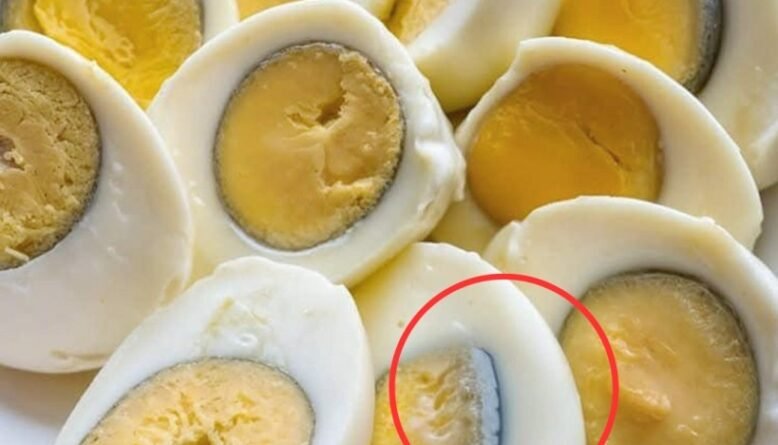
What causes the green ring around hard-boiled eggs? If you’ve ever sliced into a boiled egg and spotted a grayish-green layer around the yolk, you probably paused for a second. It doesn’t look appealing. However, it isn’t mold, and it doesn’t mean your eggs are spoiled. Instead, that thin ring tells you one simple thing: the eggs cooked too long or too hot.
Fortunately, the green ring around hard-boiled eggs is completely harmless. Still, if you want bright yellow yolks and perfect texture every time, you need to understand why it happens and how to prevent it. Let’s break down the science, clear up common myths, and walk through a foolproof method for flawless hard-boiled eggs.
A few years ago, I prepped a dozen eggs for a picnic. I left them boiling while I answered a phone call. When I finally peeled one open, the yolk looked dull and ringed in green. I almost tossed them out. Instead, I did a little research and realized I had simply overcooked them. Since then, I’ve adjusted my method. Now, every batch turns out smooth, bright, and perfectly set.
The Science Behind the Green Ring Around Hard-Boiled Eggs
The Sulfur and Iron Reaction Explained
The green ring around hard-boiled eggs forms because of a natural chemical reaction. Egg whites contain sulfur-rich proteins. Meanwhile, yolks contain iron. When you expose eggs to high heat for too long, sulfur in the white turns into hydrogen sulfide gas. Then, that gas reacts with iron in the yolk.
As a result, ferrous sulfide forms at the surface of the yolk. This compound creates the grayish-green ring you see. Importantly, the reaction only occurs where the white touches the yolk. Therefore, the discoloration stays thin and localized.
Because this process requires extended heat, you won’t see the ring in gently cooked eggs. However, if you boil eggs aggressively or forget them on the stove, the reaction speeds up.
Why Temperature and Time Matter
High heat accelerates the sulfur release. Therefore, rapid boiling increases the chance of a green ring around hard-boiled eggs. Additionally, cooking eggs longer than necessary intensifies the reaction.
Eggs continue cooking even after you remove them from hot water. Consequently, skipping an ice bath allows residual heat to keep the chemical reaction going. That’s why cooling eggs quickly plays such an important role.
When you control both temperature and timing, you stop the reaction before it becomes visible. As a result, your yolks stay golden and smooth.
Is the Green Ring Around Hard-Boiled Eggs Safe?
Safety and Taste Concerns
The green ring around hard-boiled eggs may look unpleasant, but it remains completely safe to eat. Ferrous sulfide does not make eggs toxic. However, overcooking can slightly affect flavor.
Because sulfur compounds increase with extended heat, the egg may taste a bit stronger or slightly sulfuric. While the difference stays mild, sensitive palates might notice it.
Texture also changes. Overcooked yolks turn chalky or crumbly instead of creamy. Meanwhile, whites can become rubbery. Therefore, even though safety isn’t an issue, quality certainly is.
When You Should Actually Worry
The green ring around hard-boiled eggs does not indicate spoilage. However, other signs might. If you notice a strong rotten odor, slimy texture, or unusual discoloration beyond the thin ring, discard the egg.
Additionally, always store hard-boiled eggs in the refrigerator. Use them within one week for best quality. Proper storage prevents bacterial growth and keeps flavor fresh.
So while the green ring looks dramatic, it simply signals overcooking—not danger.
What Doesn’t Cause the Green Ring Around Hard-Boiled Eggs
It’s Not Mold or Spoilage
Many people assume the green ring around hard-boiled eggs means the eggs went bad. However, mold appears fuzzy and irregular. In contrast, the green ring forms as a smooth, thin layer.
Spoiled eggs also produce a strong, unpleasant odor. If your egg smells neutral and clean, it remains safe.
It’s Not Caused by Freshness Alone
Fresh eggs can sometimes be harder to peel. However, freshness alone does not cause the green ring around hard-boiled eggs. Overcooking remains the primary reason.
That said, very fresh eggs may require slightly careful timing. Because their pH differs slightly, cooking technique still matters. Yet even fresh eggs won’t develop a green ring if you control heat and cooling properly.
So instead of blaming the egg itself, adjust your method.
How to Prevent the Green Ring Around Hard-Boiled Eggs
The Foolproof Cooking Method
Follow this simple process to avoid the green ring around hard-boiled eggs:
- Place eggs in a single layer in a saucepan.
- Cover them with cold water by about one inch.
- Bring water to a gentle boil over medium heat.
- Once boiling, immediately turn off heat and cover the pot.
- Let eggs sit in hot water for 9–12 minutes (9 for softer yolks, 12 for fully set).
- Transfer eggs immediately to an ice bath for at least 5–10 minutes.
This method prevents aggressive boiling. Furthermore, it stops residual heat quickly.
Why the Ice Bath Matters
The ice bath halts cooking instantly. Therefore, sulfur release slows dramatically. Without rapid cooling, eggs continue cooking internally.
Additionally, cooling shrinks the egg slightly from the shell, making peeling easier. So not only does the ice bath prevent the green ring around hard-boiled eggs, but it also improves texture and convenience.
If you skip this step, even perfectly timed eggs may develop a faint ring due to carryover heat.
Frequently Asked Questions
1. Can I fix eggs after the green ring appears?
No. Once the chemical reaction occurs, you cannot reverse it. However, the eggs remain safe to eat.
2. Do older eggs develop green rings more easily?
No. Overcooking causes the ring, not age. However, older eggs often peel more easily.
3. Does steaming eggs prevent the green ring?
Yes, steaming can help because it uses gentler heat and consistent temperature control.
4. Are green-ringed eggs okay for deviled eggs?
Yes. However, the color may affect presentation. If appearance matters, use properly cooked eggs.
5. How long can I store hard-boiled eggs?
Store them refrigerated for up to one week in their shells.
Conclusion
What causes the green ring around hard-boiled eggs? In simple terms, heat and time create a harmless sulfur-and-iron reaction. Although the ring looks unappetizing, it poses no health risk. Still, overcooking affects both texture and flavor.
Fortunately, preventing the green ring around hard-boiled eggs requires only a few adjustments. Use gentle heat. Control your timing. And most importantly, cool the eggs quickly in an ice bath.
With this method, you’ll slice into bright, golden yolks every time. And once you master it, you’ll never second-guess your boiled eggs again.


No Responses Yet